
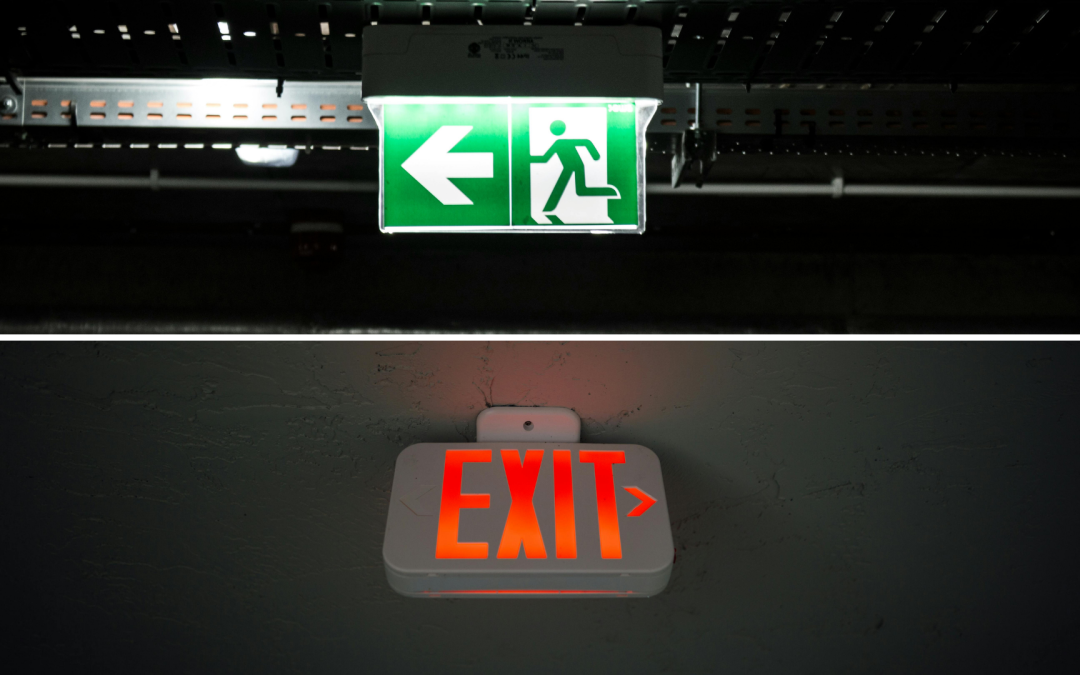
Would you rather follow a green or a red illuminated sign when safety is at stake? Are you sensitive to light and colours, or do you mainly tend to turn right (often unconsciously) when trying to find a way out? New research results from Delft University of Technology provide insights into how light can be used to optimise route choices. This may help us intelligently guide desired behaviour.
The report “Does Light Influence Route-Choice Behavior? Discrete-Choice Modeling Study” (TTR, April 2026) investigates whether lighting can influence pedestrians’ walking behaviour. The authors, Dorine C. Duives and Arco van Beek of Delft University of Technology, specifically examine how light colour and light intensity affect route choice. The research focuses on crowd management: how people can be subtly guided (“nudged”) without hard measures such as fences or barriers.
Background and objective
Traditionally, crowd management has mainly relied on physical measures such as barriers, gates, or the deployment of staff. However, this restricts freedom of movement and can also negatively affect visitors’ experiences. The researchers wanted to determine whether lighting could offer a more flexible and user-friendly way of guiding people.
Previous studies had already shown that lighting can influence behaviour, but these studies were often limited: they investigated only one type of lighting stimulus or failed to sufficiently account for differences between individuals. This study therefore aimed to:
-
systematically measure the influence of different colours and brightness levels;
-
map differences between individuals;
-
develop predictive behavioural models.
Method
For the study, a Virtual Reality (VR) experiment was conducted. Participants repeatedly walked through a virtual maze in which they had to choose between two corridors. These corridors differed in:
-
light colour (red, green, blue, white);
-
light intensity (bright or dim);
-
direction (left or right).
Because each participant made multiple choices, the researchers were able to analyse patterns and preferences.
A total of 191 people took part in the experiment. The researchers used two advanced statistical models:
-
a Panel Mixed Logit Model (PMXL) to measure average effects and individual variation;
-
a Latent Class Choice Model (LCCM) to identify different participant types.
Text continues below the image.
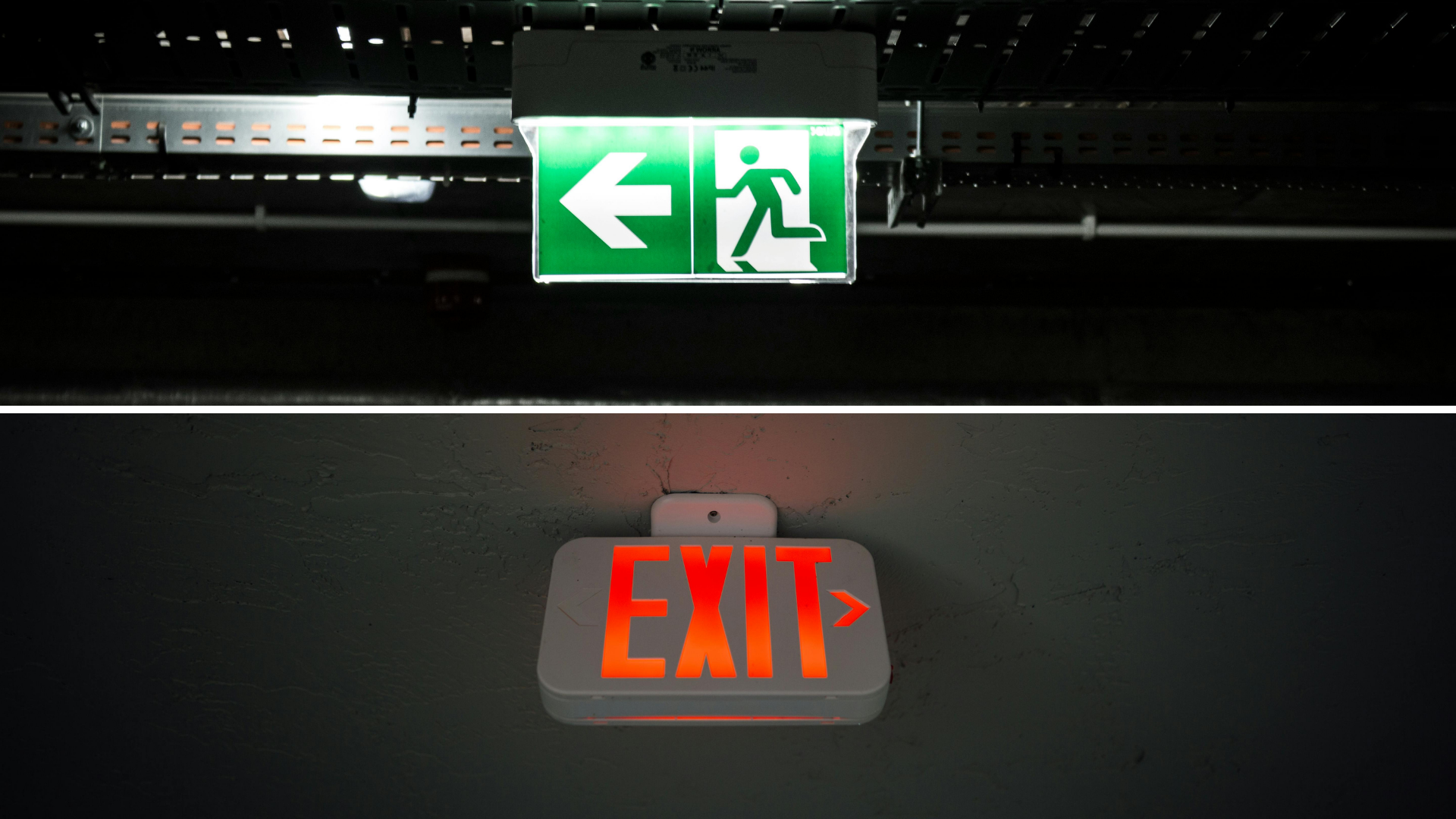
The study shows that people associate green with safety and tend to avoid red light.
Key findings
Lighting influences route choice
The study clearly demonstrates that lighting affects pedestrian behaviour:
-
Green light had the strongest positive effect: people more frequently chose a green-lit corridor.
-
Blue light also had a positive effect, although slightly weaker.
-
Red light was generally avoided.
-
Dark corridors were also avoided more often.
This means that people do not choose routes randomly: colour and brightness genuinely influence their behaviour.
Green light works best as a “nudge”
Of all the colours tested, green proved to be the most effective in steering people in a particular direction. The researchers suspect this is linked to psychological associations:
-
green is often associated with safety, nature, or permission;
-
red, by contrast, is associated with danger or stopping.
Large differences between individuals
An important insight from the study is that not everyone responds to lighting in the same way. The latent class model identified three groups:
a. Light-sensitive individuals
This group responded strongly to both colour and brightness. They avoided dark and red corridors and more often selected green or blue routes.
b. Darkness-avoidant individuals
These participants mainly responded to brightness. They primarily chose well-lit corridors, regardless of colour.
c. Individuals with a strong right-side preference
This group paid little attention to lighting and mainly chose the right-hand side instinctively. This suggests that some people follow fixed behavioural strategies that are stronger than environmental stimuli.
d. Right-turn bias
In addition to the influence of lighting, the researchers discovered a notable general preference for turning right. This “right-handed bias” appeared repeatedly across several analyses. This means that crowd managers should take natural behavioural preferences into account alongside lighting effects.
Practical implications
The study shows that lighting could potentially become a useful tool for crowd management, for example:
-
at festivals;
-
in railway stations;
-
during evacuations;
-
in large public buildings.
With dynamic lighting, organisers could subtly guide visitors without the need for physical barriers. This may prove cheaper, more flexible, and more pleasant for visitors.
Examples of applications
-
using green lighting to make preferred walking routes more attractive;
-
avoiding dark or red lighting on routes that should remain in use;
-
dynamically adjusting lighting according to crowd density.
Limitations of the study
The authors also mention several limitations:
-
The experiment took place in VR rather than in a real-world environment, meaning actual behaviour may differ.
-
The participant group was relatively limited.
-
Other factors such as noise, crowd density, and social interaction were not included.
As a result, further studies in realistic environments are needed.
Relevance for crowd management
The study concludes that lighting genuinely influences pedestrians’ route choices. In particular, green and blue lighting attract people, while red and darker routes tend to be avoided. At the same time, people differ greatly in their sensitivity to lighting stimuli. Some individuals respond strongly to colour and brightness, whereas others mainly follow habitual behaviours, such as a preference for turning right.
The study therefore provides interesting insights for smart and flexible crowd management. Where circumstances allow, lighting could be used as an effective “nudge” to subtly guide people without completely restricting their freedom of movement. This is likely to be easier to implement at a greenfield festival, inside a building or temporary structure, than in the public spaces of a city centre, where many competing light stimuli and colours are already present in the environment. It is also reassuring that Europe is already taking positive steps by widely using green emergency exit lighting.