
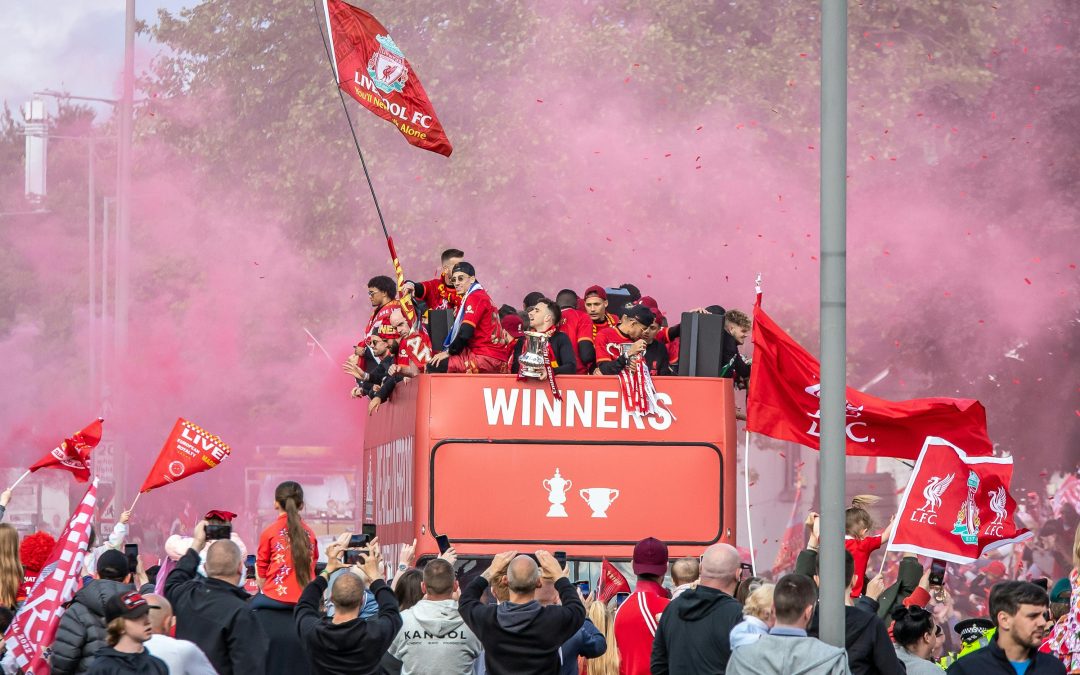
In February 2026, an independent study was published regarding the events that happened during the Liverpool FC Victory Parade of 26 May 2025. This was conducted by Eric Stuart of Gentian Events on behalf of Liverpool City Council. The study contains valuable lessons that are also relevant for other cities with potential celebrations.
Massive events bring out the best and the most vulnerable in a city. They connect people, strengthen pride, and create memories that last a lifetime. But they also expose the limits of what a city can handle. The research into the Liverpool Victory Parade makes this painfully clear. Different recent football events in the UK and around Europe show similar patterns.
With an eye on the coming period, in which various cities are preparing for celebrations following a championship, promotion, or cup win, this is not a theoretical exercise. It is a real scenario that municipalities and emergency services must prepare for.
Liverpool 2025: well-organized, but overwhelmed
The report is remarkably honest. The organization was in order: the plans were solid, the cooperation between emergency services strong, and the execution professional. Thus, more than thirty planning meetings were held, there was an extensive site management plan, tabletop drills took place, and real-time drone footage was used to monitor the crowd. Yet, the event was overtaken by reality.
The main problem: the scale. While a few hundred thousand visitors were anticipated, an estimated more than a million people turned up, not only from Liverpool and the United Kingdom, but also from the US, Canada, South Africa, and dozens of other countries. The combination of factors that caused this is aptly described in the report as a Perfect Storm, which consisted of a number of (unique) elements:
- the title was secured early in the season (on April 27), giving both organizers and visitors a full month to plan;
- the parade fell on a public holiday; the city had just completed three busy days with the Radio One Big Weekend; and
- for many fans, this was the first Premier League celebration, as the 2019/2020 celebration had been cancelled due to Covid. The conclusion of the report is stark: the plans were good, but the assumptions about behaviour and turnout were not.
What makes the insights from Liverpool relevant for celebrations elsewhere is not so much a lack of preparation, but a structural underestimation of (continuously evolving) human behaviour in large crowds. The report identifies several recurring patterns in this regard:
The “destination event”. Events are no longer local. People travel consciously to unique moments. The approach must be tailored to this: therefore, in the preparations, also consider hotel bookings outside the city, early train reservations, and flights to nearby airports.
Multiple use of space. Visitors move strategically: they seek better spots and try to experience multiple moments. In Liverpool, large groups followed the buses parallel via the side streets, behaviour that had not been seen before. A more linear route — instead of the partly circular route Liverpool used — could limit this “leapfrogging”.
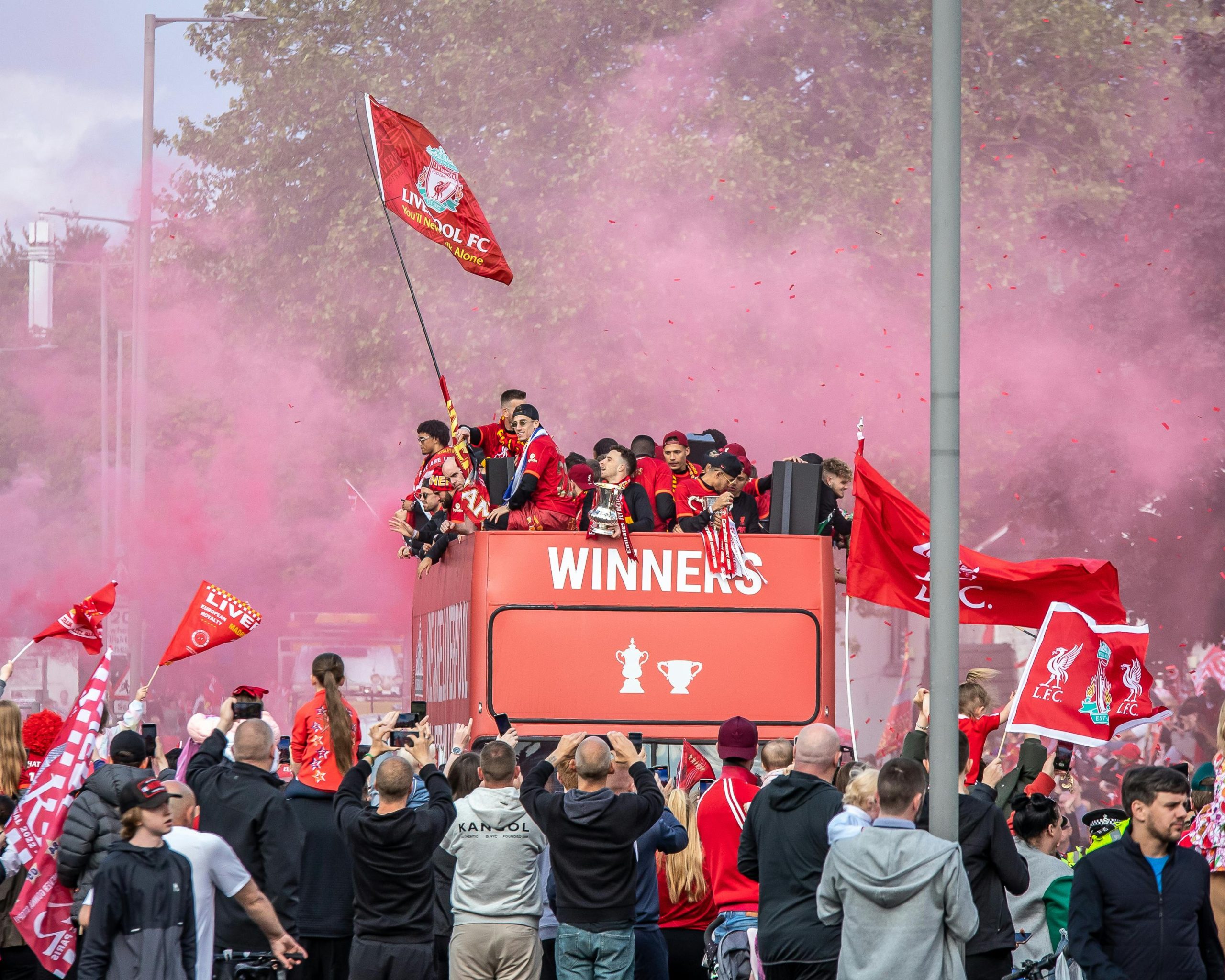
Risky behaviour as part of the experience. Torches, climbing, filming: these have become part of how people experience events. The report points to the influence of social media and the desire for a “media moment.” This also applies to players on the bus: if they seem to normalize flares, it is contagious for the crowd.
Social and digital amplification. Behaviour spreads faster than ever. Footage of risky behaviour reinforces that behaviour — both during and before the event, when previous smoky victory celebration images serve as a backdrop in the announcement communication.
The myth of the “safe event”
One of the strongest insights from the Liverpool report is that a completely safe event does not exist. “All events by their very nature carry a degree of risk,” says Eric Stuart. That is not a free pass, but a reality check. The core question thus shifts from how to prevent all risks to how to deal with risks wisely.
Stuart is also clear on the question of whether Liverpool should host a new event: “You could, you should, and I have no doubt you will do it again.” Events that bring people together to celebrate successes are indispensable. However, they require that both organizers and authorities learn from what can go wrong.
The lessons from Liverpool are directly applicable:
Think bigger than your city. Use data on transport, overnight stays, and online activity to estimate the actual scale. Involve Network Rail equivalents (local, regional and national transport authorities) early in the planning and tabletop exercises.
Design for expected behaviours. Take flare usage, climbing in, and movement dynamics into account during the planning phase. Work not only with static control of the maximum safe density, but also with movement and mood analysis.
Intervene sooner. Do not wait until it is “too busy.” Closing off before it seems necessary prevents dangerous congestion. The report uses the metaphor of a tap that you turn off before the bucket overflows.
Give space to professionals on the street. Decisions must be able to be made where they happen, by combined teams of police, security, and event organizers, without every step having to be relayed upwards, which causes unnecessary delays. Work on setting standards. Behaviour is partly influenceable: through prior communication, exemplary behaviour from players and the media, clear boundaries, and legislation that enables authorities to take preventive action against dangerous structures or pyrotechnics.
In conclusion
The success of an event is determined not only by the organization, but by how well we understand what happens when crowds gather. Liverpool has realized this through this report. It is essential that cities, organizers, and policymakers take note of these lessons before the next championship is celebrated.
Some advice for cities that may have to deal with a football celebration. Think bigger than the location of the celebration. Develop scenarios involving crowd levels of varying degrees. Use industry specialists who understand the behaviour of the target groups so that the element of surprise can be further limited. And get tested and stay sharp by training, practicing, and having “boots on the ground” at the event so that you are able to respond quickly and effectively to risky behaviour and unforeseen developments.
ESI’s professional team has a strong background in football, crowd safety management and public order management. If you need any advice, we’re here to help.