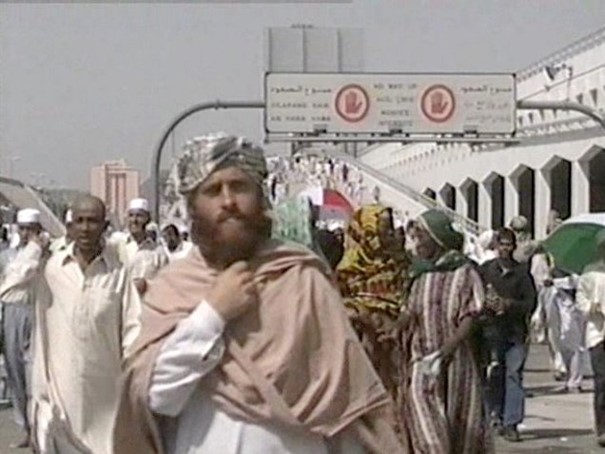
Crowd management is a critical aspect of ensuring the safety and well-being of the millions of pilgrims who gather in Mecca for the Hajj each year. With vast numbers of people performing the religious rituals within a short time frame, it presents significant challenges in managing crowds and pedestrian movement. A new paper by Sadek Kadi et. al. suggests which strategies need to be implemented to ensure the safety of millions of pilgrims in Mecca.
The Hajj is the annual Islamic pilgrimage to Mecca, mandatory for Muslims who are physically and financially able to do at least once in their lifes. Hajj represents one of the Five Pillars of Islam. Sadeq Kadi, Alias Abdullah, Syahriah Bachok, Ziad Baydoun, and Abdelaziz Berghout conducted an analysis of crowd management and pedestrian movement during the Hajj pilgrimage and published their findings in the Journal of the Malaysian Institute of Planners (vol. 22, 2024). The authors reviewed literature and analysed pedestrian movement systems to identify key bottlenecks and safety risks at the Hajj. Additionally, field observations were conducted from 2019 to 2024 to gather data. The study emphasizes the importance of integrating advanced simulation tools with urban design to optimize pedestrian pathways and prevent overcrowding, aligning with Saudi Vision 2030’s goal of enhancing the pilgrimage experience and ensuring participant safety.
Routes of Arafah and Muzdalifah
Pedestrian paths in Mecca’s holy sites, from Muzdalifah through Arafat to Mina, are crucial infrastructure for ensuring pilgrim safety and comfort during the Hajj. These paths include paved surfaces, benches, misting systems, concrete barriers, LED lighting, and accessible routes for people with disabilities. Walking speeds differ by gender and age, with males typically walking faster than females (1.5 m/s vs. 1.2 m/s), while older individuals, particularly those over 55, walk more slowly due to physical limitations. Pedestrian simulation models are used to predict crowd behaviour, optimizing transportation systems and identifying bottlenecks to improve safety, comfort, and space management.
The authors simulated multiple scenarios for the unidirectional pathway from Arafat to Muzdalifah. Six pedestrian flow scenarios were compared and evaluated based on pedestrian speeds, crowd densities, waiting times, and flow efficiency. Various factors were simulated to demonstrate their effects, such as relocating services (bathrooms, water fountains, and waiting areas) outside the pathway.

Map of Hajj pilgrimage sites (source: Wikivoyage, extracted 102124)
Recommendations
From this study, the authors made recommendations to enhance public spaces during the Hajj pilgrimage. There are four key interventions: optimise charitable distribution sites, centralise seating, and redesign restrooms and water fountains for better accessibility. Three new squares along the pathway, featuring amenities and curved connections, aim to improve pedestrian flow and safety by relocating services away from the main pathway.
Additionally, based on the simulated scenarios and the current situation, the authors developed a framework to optimize pedestrian movement systems (PMS) during the Hajj pilgrimage. This framework integrates urban design principles, crowd management strategies, and crowd dynamics theory. It focuses on creating safe, comfortable environments with clear, vehicle-free pathways, wide sidewalks, and well-placed amenities. By addressing density and layout, the framework aims to enhance safety and efficiency during Hajj and provides practical insights for managing crowds in various urban settings.
Effective crowd management during the Hajj pilgrimage is essential to ensure the safety of millions of pilgrims who gather in Mecca each year. The analysis conducted by Kadi and colleagues highlights the critical need for advanced planning and innovative design to address the unique challenges posed by such a large influx of people. By integrating pedestrian simulation models and urban design principles, the proposed framework offers actionable strategies to enhance safety, comfort, and overall pilgrimage experience. As Saudi Arabia continues to implement its Vision 2030 goals, prioritizing crowd management will be vital in ensuring that the Hajj remains a spiritually fulfilling and safe experience for all participants.
If you want to read the whole paper, please send us an email and refer to the Hajj paper.