
By Syan Schaap
Much of the recent CP3 conference in St Andrews, Scotland, focused on crowd behaviour in conflict situations and during emergencies. However, attention was also given to crowds gathering for events such as festivals and religious ceremonies. What do we know about their behaviour – or, more importantly, what do we still not know enough about?
The international group of psychologists who gathered at the University of St Andrews on 27 and 28 August 2026 for the conference Crowds, Psychology, Policy, and Practice (CP3) brought a range of perspectives on crowd behaviour at events.
For example, the Indian specialists attending the conference referred to large-scale religious gatherings in India, where serious incidents sometimes occur.
Previous research tells us that serious incidents are relatively common at these types of events.
This can be attributed to a combination of factors:
- Event organisation is not always professional and may lack knowledge of crowd management.
- Participants can develop such a strong sense of social identity that they feel safe within a crowd of fellow believers.
- A call from a religious leader can trigger a sudden influx of visitors, which may exceed the capacity of the surrounding infrastructure.
This can lead to crowd crush incidents and other physical disasters.
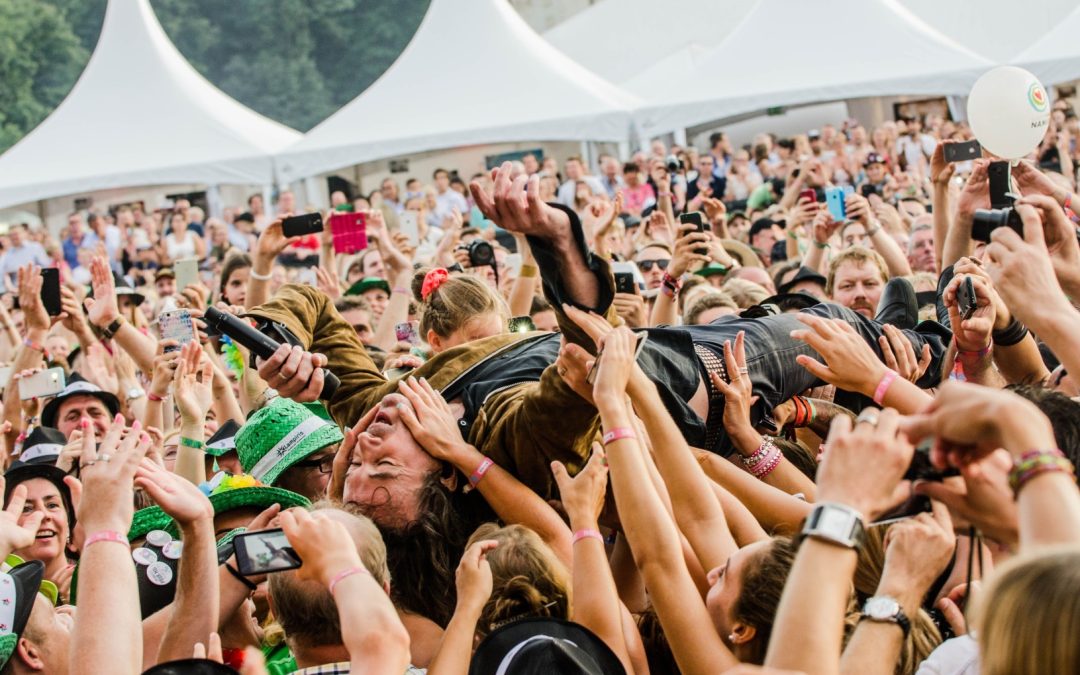
In the Western world, the focus tends to be more on music festivals and community celebrations. We know that strong social identities can also develop at concerts and festivals, although this is generally less common at open-air community events.
At the same time, the general understanding is that, across various types of public events, around 90% of attendees follow the instructions given by event organisers.
Beyond the risks, being part of an event crowd also has many positive aspects. People feel happier, their sense of collective identity is strengthened, and they expect support from others. Attending an event can even have positive effects on people’s health. Sharing emotions at an event can also help people process and manage those emotions.
What We Still Don’t Know Enough About
It is worth examining what we still don’t know. One of the issues raised was the lack of insight into generational developments.
How do younger generations behave at religious events, concerts, festivals and community celebrations? How do they relate to older generations attending the same events?
During the conference, some concerns were raised about consumer behaviour. As festivals increasingly partner with brands, offer luxury products and charge higher prices, attendees are gradually being treated more as consumers than as fans of the event concept.
This may encourage a consumer identity in which the individual takes centre stage. In turn, this could have a negative impact on mutual solidarity and the sense of happiness that comes from feeling part of a crowd.
What Do We Want to Know More About?
What do we need to learn more about when it comes to crowds at events? Three suggestions were put forward in response to this question.
1. Understanding digital crowds
First, we need to gain a much better understanding of digital crowds. Today’s teenagers see the online world as just as real as the physical world.
Researchers still have limited insight into what young people do online and which groups they identify with. We also don’t yet know how this affects their wellbeing or their behaviour towards other members of these groups.
We also have an incomplete understanding of how these online dynamics translate into behaviour in the physical world.
2. Developing a framework for understanding crowd behaviour
The second suggestion was to develop a framework that helps us better interpret crowd behaviour at events.
This would make it easier to recognise the extent to which a crowd has developed a shared social identity, and identify what can be done to strengthen that identity.
3. Translating theory into practical training
The third suggestion was to develop practical training programmes for staff working in organisations involved in events.
Theoretical knowledge needs to be translated into practical guidance and clear actions that people can apply in their day-to-day work. Academics could also become more involved in operational planning and training.
ESI will remain involved in this initiative, which aims to use crowd psychology to improve our understanding of group behaviour.
We will start applying these insights in our training courses and when providing advice on crowd management at events.